

Russian soldiers on a tank ran over my cherry tree and offered me some Soviet cigarettes
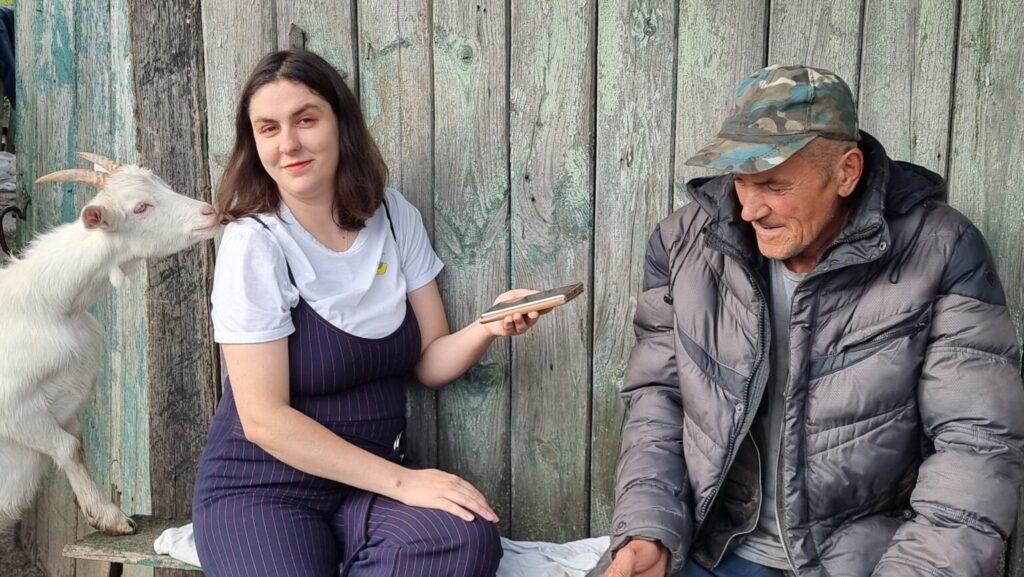
M., from Pryputni village (Chernihiv region, Ukraine), shared stories about a bicycle in a puddle of blood, a tank in the yard, and a burning house.
The name has been encrypted for security purposes.
M. greets us near a house, holding towels in his hands. He brought bedding for the bench to make our seating more comfortable.
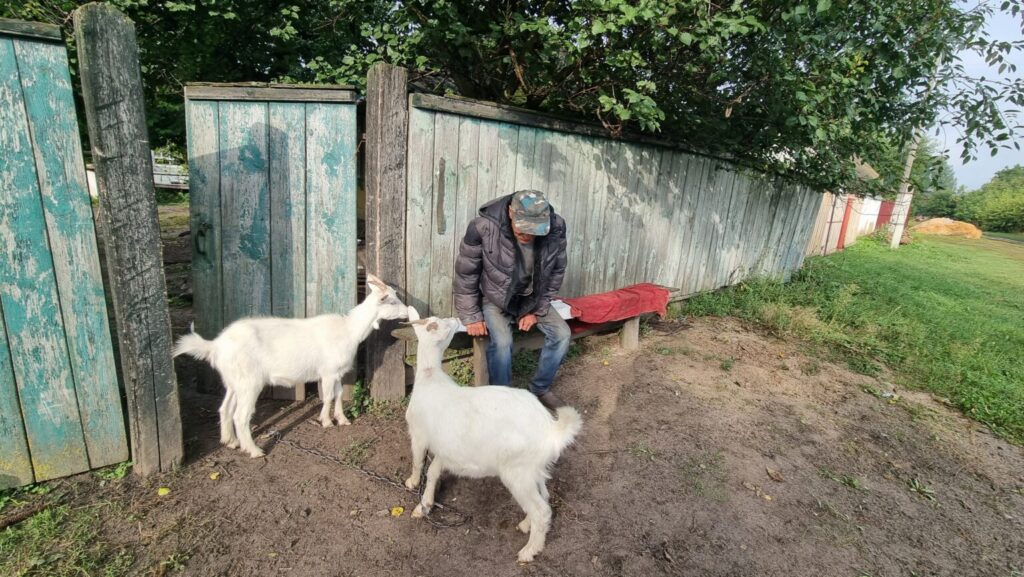
During our conversation, M.’s pets keep us company. Even the neighbor’s dog lies down near M.’s feet. Goats and cats circle around us, seeking treats and attention.
The man begins to tell his story.
“When all of this began, I woke up at 6:00 a.m. on February 24, turned on the TV, and saw Zelensky. I didn’t immediately understand what he was saying. To put it bluntly, I couldn’t make heads or tails of it. So, I thought, ‘What’s he jabbering about?’ I didn’t grasp it at all, so I just went to work.
Sometime after dinner, I saw that all my neighbors went outside. I asked what’s up. They said: M., the war has begun! The war has begun!
Around 7:00 in the morning, a convoy of vehicles, armored personnel carriers, and tanks arrived. For a month they were just walking back and forth past the village.
I used to work and travel in Russia, I have friends there, so I couldn’t understand, how could they do that? They just kept wandering around for a month, but as soon as they understood they’d have to leave, they made some mess. Chaos, chaos has begun.”
M. tells how he first met Russian soldiers. He was walking home and saw a group of armed men on his street.
“I thought, what should I do? They are russians. I decided to go home. It was springtime, it was still cold, so I thought: I need to warm my house. That’s when I heard them shout: “Owner!”
I went out, and there were seven men with assault rifles.They asked: “Are there any officers here at all?” I said – what officers? Are you kidding me? There are only about three people living here.
Well, you understood me, right? How could there be any officers?
That’s it, they left. I just started to light the stove. And then there’s another scream. I went out, there was a Russian with a machine gun. Much younger than me. He asked: “Man, do you smoke?” And we didn’t even have toilet paper. Yeah! And he said: do you smoke? Sure we didn’t have anything to smoke! I said: I smoke, but I don’t have one cig left. And he gave me a pack of “Stewardesses”. I was still a boy when that “Stewardess” was released.” (Old Bulgarian cigarettes, popular in the Soviet Union in the 80’s).
M. laughs sincerely for the first time in the entire conversation.
“Imagine how long it has been in their warehouses. Am I right? Well, I had a chat with him. Simple man, just like me. He said that he was also from a village.
I told him that I used to work in Moscow. He said that he had never visited Moscow. And I said, I said: you know what? That’s funny, cause I’ve been to Moscow many times.
M. says: when the Russians were retreating, he barely escaped death, hiding in a ditch from “a ball of fire, similar to flaming corn.”
And then immediately tells us about the first days of the occupation.
“And for a long time I didn’t realize that the war had started and the shops were already closed, so I had to go to the neighboring village. I turned back and saw that the Russians were standing right before me. Nowhere to run. And as I kept walking, a Russian soldier saw me. There was a Buryat guy with him, and he spoke to me in Ukrainian.
He said to me “Dobrogo dnya” (“Good day” in Ukrainian.) Well, I responded “Zdrastye”(“Hey”— in Russian) in Putin’s language.
He reluctantly answers questions about the deaths of local residents.
“One day it was like this – I parked my bicycle near the store, and the next day when the convoy had left, I thought I’d go get my bicycle. But when I arrived, there was a puddle of blood next to it. When I asked people about it, they said a fellow villager had been shot. I don’t know why it happened, and no one talks about it.”
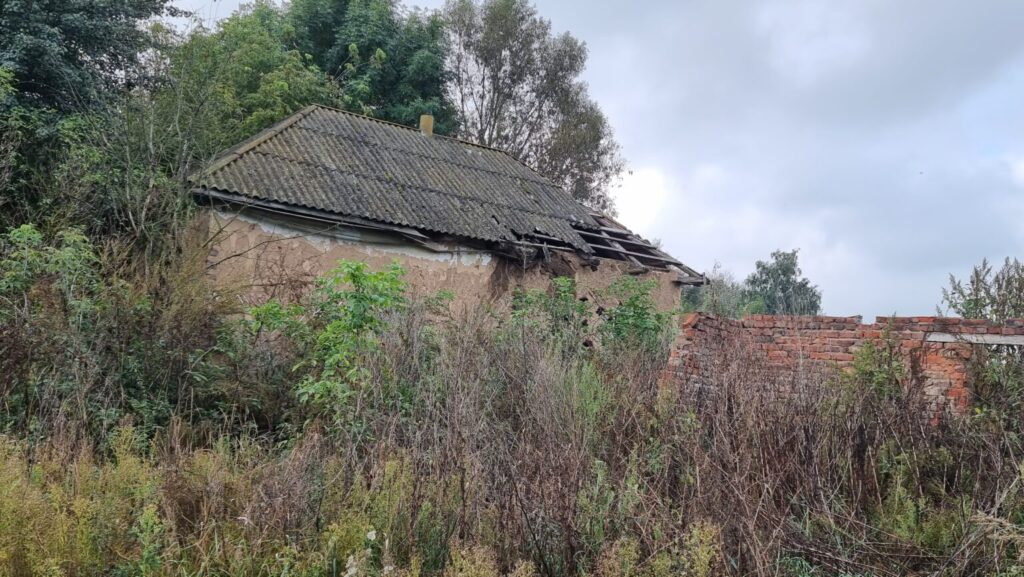
I myself had a tank standing in my yard. They broke my cherry tree…
M. does not know what the tank was doing in the yard, but when asked about it, he laughs bitterly. He says he didn’t ask. But he does not regret the event itself – God had mercy, the house survived. Neighbors were less fortunate.
“The neighbors’ house caught fire. We wanted to call the fire brigade. And the driver of the car said: what if they shoot me? We had to manage it ourselves. My neighbor told me – let’s extinguish it, and when the Russians come, you just boo them, wave your hands or something, you know, make them run away. I’m not making it up!
M. did not have the opportunity to evacuate, and he himself had no such plans.
“A Russian once said to me – why didn’t you run away using the green corridor? And how should I know about that corridor? I have no mobile phone, no electricity, no TV, no radio. There was water from the well, that’s all I had. How was I supposed to know?”
While we are talking, M.’s goats are constantly trying to join the conversation. The host quarrels softly. Marysia, a chubby kitty with ginger stripes, constantly tries to climb into the owner’s arms.
“The animals survived everything. I got my goats only when the Russians left. I often think about the neighbor’s dog. The neighbor says that he pulled him out of the burning shed, but the dog used to always hide there, so he climbed back. Well, he burned alive. Poor thing.
The chickens were hiding under the shed, but there was already no shed. Everything burned down.
M. recalls: most of his neighbors left, only two households stayed. However, after the de-occupation, everyone returned.
“The day when everything was over, I saw my neighbor. During the occupation we had three households here, then she and her husband left. And that day I saw her riding a bicycle, carrying her belongings. When she saw me – could you believe it? – she cried so much, I almost started crying myself! She said: dear, I thought I would never see you again.
And she said to her husband: there should be vodka at our house, if the Russians haven’t taken it away. Go, she said, and pour him some. Because he was the last person we saw before we left and the first person we saw the day we came back.”
M. asked not to mention his name. He said that when the Russians come back, they will shoot him “right here, by the fence” for this kind of story.
A shaggy neighbor’s dog led us to the road.
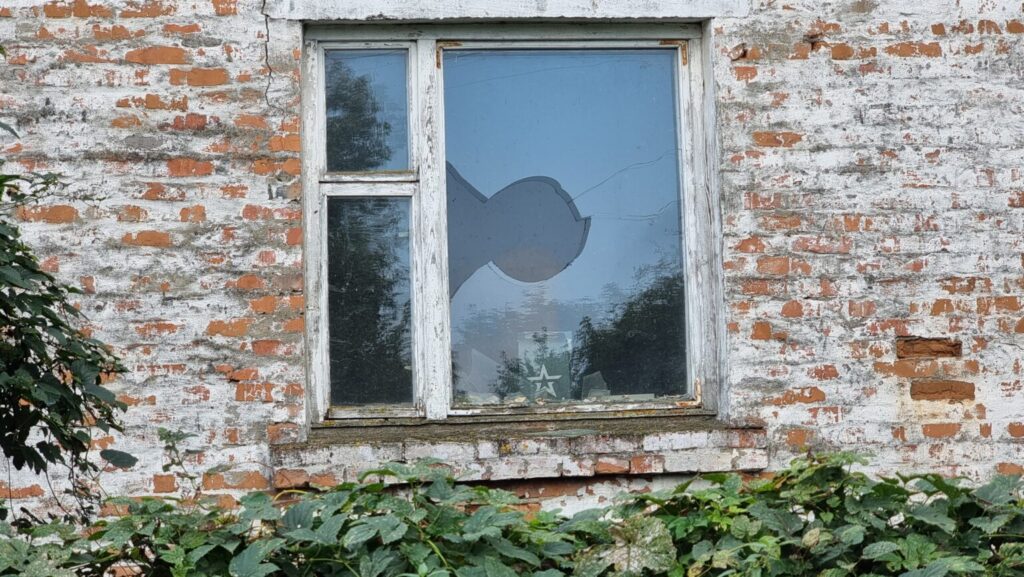
On the way back, we found a Russian dry ration standing on the windowsill of an abandoned house with broken windows.
The material was prepared by Daria Danova and Kristina But as part of the «Truth Through Stories» School.
The project is implemented by the Education Human Rights House (Chernihiv) with the support of the Ministry of Foreign Affairs of the Czech Republic as part of the local transformation project «Ukraine and Ukrainians: Modern Chronicles of the Fighting for Freedom and Democracy».
