02Чер2026
Розуміємо права людини Мережа домів прав людини

контакти

Провулок Луговий, 1 Г,
с. Количівка,
Чернігівський район,

Чернігівська область,
Україна 
15563

+38 0462 930-907
+38 0949 881-907

Позначка: war crimes

Frame 273
Новини

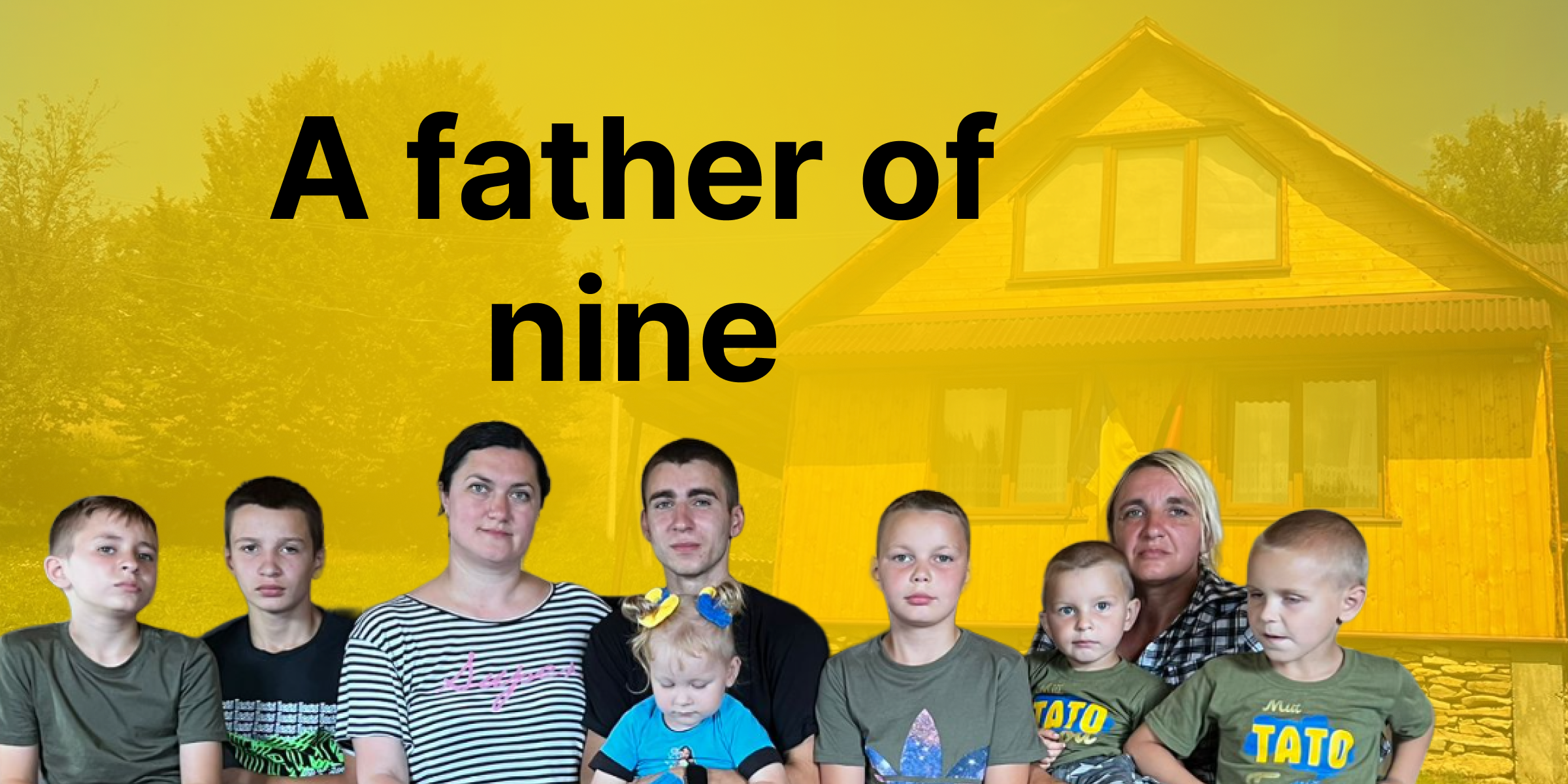
A father of nine: the story of fallen soldier from Frankivsk region

The story of bravery and sacrifice of a large Ukrainian family, led by a hero. A family that, despite heavy losses, sticks together and never gives up.

“My Dad is A Hero” – this slogan is now proudly worn on the T-shirts of the younger sons of the Kondrat family, who reside in the small mountain village of Bubnyshche in Ivano-Frankivsk region. Their house stands out among the others – a modest orange building perched on a hill, with two flags flying high on its façade, the blue and yellow alongside the red and black.
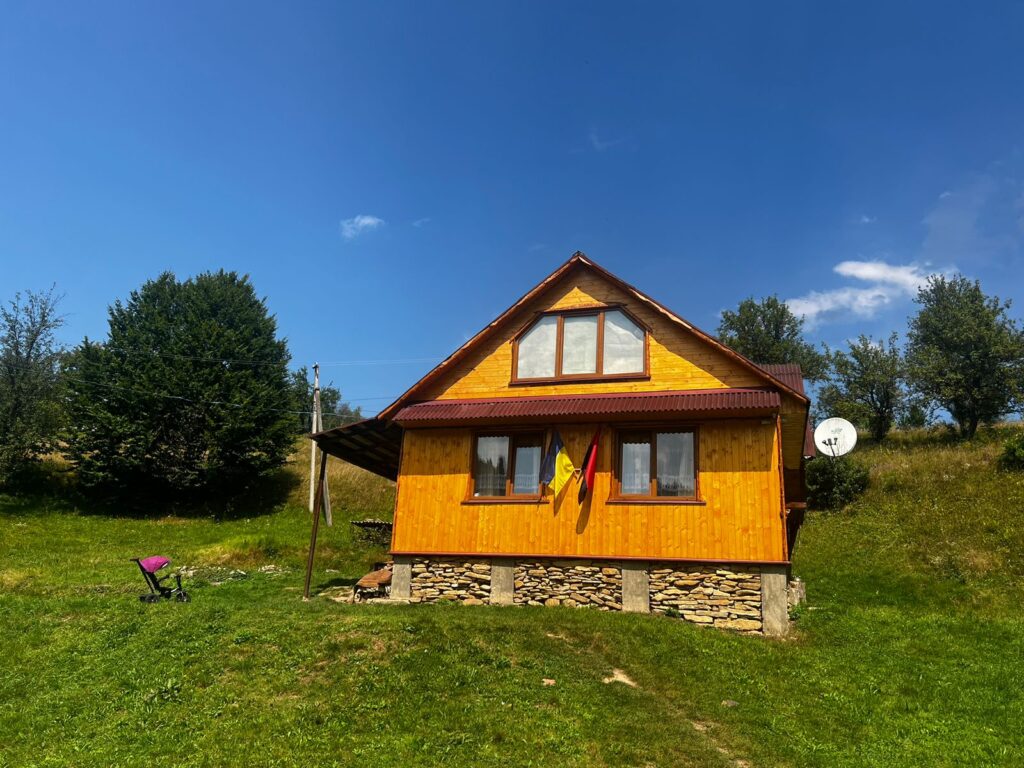
These flags were raised when they brought Vladimir’s body home. In the summer of 2023, the father of nine children lost his life in the battlefields of Donbas. The news sent shockwaves throughout the region, raising questions about how a father from such a large family found himself on the front lines.

His wife, Maria, offers a simple answer to that: “Vladimir made the decision to go, and nobody could stop him anymore.”

A Happy Dad

Maria and Vladimir had known each other since birth, growing up as neighbors and attending the same school. After Vladimir finished his military service, he returned to Bubnyshche, where they celebrated their wedding. Over the years, they welcomed seven boys and two girls into their family. The oldest, Andriy, is already 23, and the youngest, Sofia, is just two.

Their village, located far from the center of the Bohorodchany community, offered few job opportunities. The only options were at the primary school or the local medical center where Maria worked as a nurse.

To support their large family, Vladimir often traveled for work. Initially, he worked abroad, and later, in major Ukrainian cities, where he worked in construction and repairs. During this time, Maria took care of the children, tended to the garden, and looked after the livestock.

Even though their father was frequently away, Andriy, the oldest son, fondly remembers him: “He was generous and never complained about money. We went through all sorts of difficulties, but whenever he had the opportunity to buy something better, he spared no expense for us. And when Sofia was born, he was overjoyed, like any proud father. He really wanted another daughter.”

Father, son, and two uncles – all in the military

As full-scale war broke out, four men in the Kondrat family donned military uniforms. Among them was Vladimir’s 19-year-old son, who shared his father’s name.

Andriy reveals that they tried to convince both of them to stay home, but it was in vain. On February 24, when the capital, Kyiv, came under attack, Vladimir was working there. He wanted to go to the east immediately but returned home after their pleas. From there, he left for his duty. Younger Vladimir followed soon after.

While at home, Vladimir rarely talked about the war. The family still doesn’t know his callsign or even see his patches. However, they are certain that he experienced enough because each time he warned them he might not return from his next trip to the frontline. During his last visit to Bubnyshche, he showed his sons where he kept his tools, so they could continue the repairs he had started. As a memento, he left a few military uniforms for his oldest son, Andriy. The son cherishes them.

Younger Vladimir also came home briefly a few times, but it was evident that the service took a toll on him.

“When he started talking about the frontline, it was hard to get him to stop. He witnessed death and bodies that had been left unevacuated for months. Once, to save a wounded comrade, he had to drag him through a minefield himself,” says Andriy.

Two uncles of the Kondrat family also became military men. One is Maria’s brother, and the other is Vladimir’s brother. The former, Mykhailo, was also in the heat of the Russian-Ukrainian war and lost his arm. He is currently undergoing rehabilitation.

Life After Loss

After Vladimir’s death, younger Vladimir was sent to Kyiv from the frontlines. The family hopes he will return to Bubnyshche eventually. For now, the oldest son, Andriy, is in charge at home. He juggles two jobs, providing people with internet and surveillance setup and repairing laptops and phones. He often works late, with occasional trips to Lviv. Despite the long hours, he doesn’t complain; he says he enjoys his work.

Maria will return to work as a nurse at the local medical center in March of the following year. Sofia is about to turn three, and since there is no kindergarten in the village, they are still considering what to do with her. The boys attend school – the younger ones in the local Bubnyshche school, and the older ones travel to a neighboring village, Polyanitsa, where they attend a higher grade. They get there by bus, and in winter, they have to walk through the whole of Bubnyshche to reach the bus stop at the other end of the village, a two-kilometer journey.

After the funerals, Maria was left wondering what to do. Grief weighed heavy on her heart, her son was at the front, and she still had to raise six underage children.
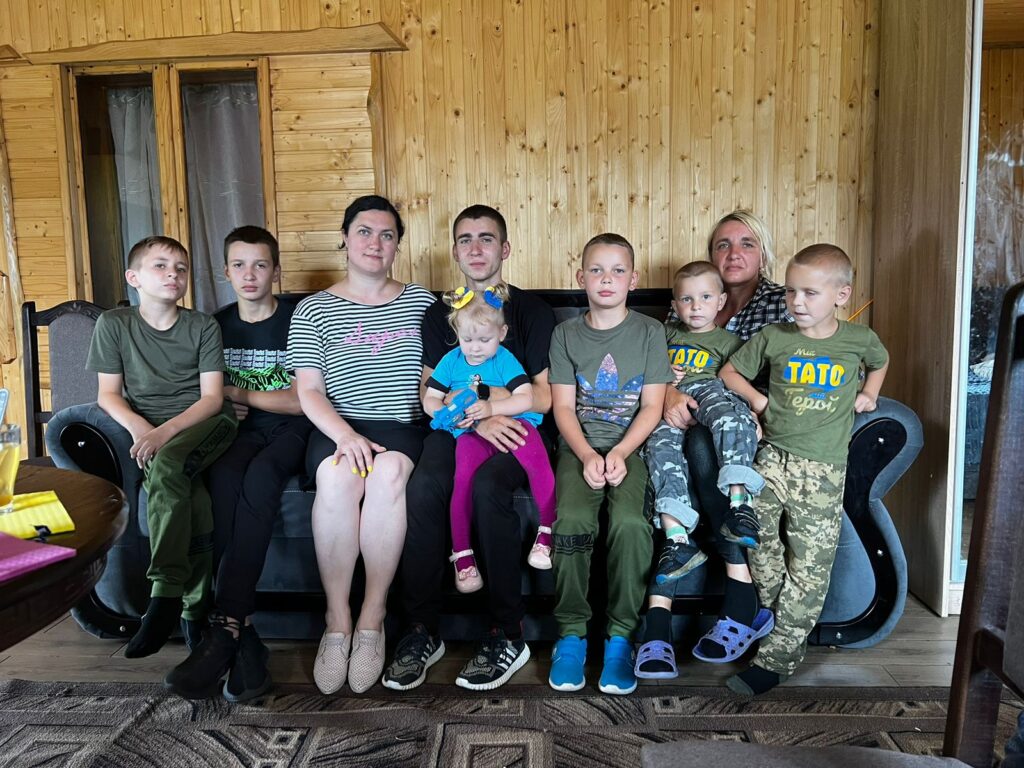
Maria found support from the head of the Ivano-Frankivsk regional organization of “Moloda Prosvita,” Eugenia Bardyak, who launched a call among Ukrainians to help the family financially. Most people sent money, while some also sent groceries and clothes. The donations were first used to purchase a sofa for the house because they didn’t have enough sleeping space. The older kids had to spend nights at their grandmother’s place. They also bought a washing machine, which greatly eased Maria’s household chores, as she had to do laundry every day.

Maria is grateful for the support and says it will make life a bit easier for some time. But they don’t plan to rely solely on outside help. This big family sticks together and continues to support each other. They often visit Vladimir’s grave, with little Sofia accompanying them. When they step through the cemetery gates, she already knows the way and points her finger to show where her dad rests.


This material was prepared by Tetiana Pigurska, a participant in the educational program “Truth Through Stories,” which is carried out by the Human Rights Education House in Chernihiv with the support of the Ministry of Foreign Affairs of the Czech Republic as part of the local transformation project “Ukraine and Ukrainians: Modern Chronicles of the Struggle for Freedom and Democracy.”

Frame 238
Новини

Half a jar of flour, a glass of oil, and half a loaf of bread. How the village of Pryputni survived the occupation

The village chief in Chernihiv region tells a story about a month without light, the strength of the community, and what it means to be a hero.

In the morning, it’s warm and calm on the street as my colleagues and I arrive in the village of Pryputni. A man on a bicycle approaches us and introduces himself as Anatoliy Mykolaiovych. Anatoliy is a polite and friendly man who immediately invites us to the village administration. Based on his conversations with local residents, we understand that he is the village chief, well-informed about everything that’s happening. During the occupation, he used to ride his bicycle around the village daily to ensure the well-being of the locals. The village chief explains that we’ve stopped at the same crossroads used by the occupiers as they advanced towards Kyiv, pointing out the affected individuals and buildings. He inquires about everyone’s well-being and what kind of assistance is required.

We introduce ourselves and mention that we are volunteers from Belarus, and we do not support either the occupiers or the dictators. Anatoliy Mykolaiovych agrees to be interviewed.

What were you doing before the full-scale invasion on February 24, 2022?

On February 23, 2022, I was called to the municipal office, where they informed me about what to do in case a war breaks out. We agreed that starting from March 1, I would assume the duties of the village chief.

Could you have left the village?

No, this is the village where I live with my family. I couldn’t leave them or the village.

On February 24, we woke up to the sound of explosions and shelling. The first columns passed through our village. They had good equipment and behaved non-aggressively. They waved to us and allowed us to take pictures and shoot videos. It felt like they were confident that they were welcomed here.

Our village was only used as a transit point for the columns. The occupiers would come to us only when they got lost or needed water. At that time, 350 people lived in the village.

From March 1, the village was cut off from electricity. Local residents rallied together and supported each other as best they could. After a week, their bread ran out, and the local grocery store had only enough supplies for two weeks.

We see how difficult it is for our hero to recall these events, so we pause. During this time, the village chief receives a phone call, and we hear him ask someone what kind of assistance is needed. We understand that he has just helped someone from the villagers.

How did you manage to provide the village with everything it needed?

The village was blocked by the occupiers. They used the paved road, so we had to use dirt and forest paths. These paths went through swamps and were covered in snow. That’s how we made our way to the pontoon bridge. These roads were only suitable for tractors and special vehicles; regular cars couldn’t pass.

A local entrepreneur contacted us through the municipal office. He could deliver 10 bags of flour for two villages, and we divided the seven bags we received among our residents in one-liter jars – 2.5 jars per family. We transported two bags through the forest to a neighboring village, where the residents gave us oil. We distributed half a liter of oil to each family. Unfortunately, it wasn’t enough for everyone. After some time, the same entrepreneur helped us with bread and brought 200 loaves, which amounted to half a loaf per family. The village we were supposed to take the bread from was 12 kilometers away.

How did the villagers behave while the village was under occupation?

There were shelling and bombardments every day. The military noticed that local residents were observing the movement of their equipment, so they started shooting in the air to prevent people from going outside and witnessing what was happening around.

People in the village came together and started helping each other more, putting aside any previous quarrels and disputes. We conducted daily rounds of the village to check on everyone’s well-being. One night, they started shelling a house. They fired armor-piercing and regular bullets. After the attack, we went to check if anyone was hurt, and the homeowner responded. It turned out that the Russian soldiers had been looking for their deserters. Afterward, we relocated the homeowner and her daughter to another house.

How did the occupiers behave?

In the early days, the occupiers shot two of our young men. We found one with a gunshot wound to the head, and the other’s remains consisted of just bones. During the village’s occupation, the occupiers killed seven residents. The last one was killed as we were leaving. We noticed that, after a month, the occupiers became very nervous and started shooting randomly to keep people from going outside. The Ukrainian Armed Forces’ artillery was hitting their positions accurately.

And what about the local residents?

While our village was blocked and there was no way to move between villages, people from neighboring villages gathered to establish logistics. I stayed in the village for a month and couldn’t leave the village because I couldn’t leave the villagers alone, feeling responsible for them. Even when I had to go to the municipal office, I understood that I would be more helpful in the village. My family, my wife, daughter, and son, stayed with me throughout this time.

Unfortunately, we couldn’t defend ourselves, so we did everything we could to help and protect each other and gather information about the enemy’s movements on our land. During this time, we didn’t notice anyone from our village assisting the occupiers or expressing support for the “Russian world.” The church in our village has been Ukrainian for a long time, but there are some parishioners of the Moscow Patriarchate. Even they didn’t show themselves as supporters of the “Russian world.”

So, you are a true hero…

I don’t consider myself a hero—I did everything I could. I organized the construction of roads, personally drove special vehicles to avoid risking people’s lives when the roads were shelled. We succeeded in providing people with essential supplies. We moved the municipal office to a safer location and provided it with electricity when there was no power for a month. My main concern is that people have everything they need, and I’m pleased that people believe in me and offer their support. The villagers collected 100,000 hryvnias for a fence to make our village even more beautiful. We’ve been fortunate with mild winter weather, and it’s been a fruitful year.

We thank Anatoliy Mykolaiovych for the interview, and we continue to talk with him for a long time after the interview ends. The village chief shows us a diary he kept during the occupation, sharing stories about individual villagers and their heroic acts.

But this is a completely different story. Here, every person has their own unique story. Each one did and continues to do everything they can.

And each one is a hero.


Prepared by Alyona Zharkovych and Maksym Dmytrakov within the framework of the “Truth through Stories” School.

Translation from Belorussian: Darya Danova.

This project is implemented by the Human Rights Education House in Chernihiv with the support of the Ministry of Foreign Affairs of the Czech Republic as part of the local transformation project “Ukraine and Ukrainians: Modern Chronicles of Struggle for Freedom and Democracy.”

Frame 295 (6)
Новини

My son was killed by the Russians

The resident of the village of Priputni in Chernihiv region tells a heartbreaking story of civilians killed by the Russians.

Priputni is a small village in Chernihiv region. The Russian military was first seen here on February 25, 2022, and they stayed in the village until the end of March 2022, causing the most damage as they retreated. As you walk through the village, it’s hard not to notice the visible scars of war: burnt houses, destroyed buildings, and the traces of military vehicles on the asphalt.

But what the naked eye can see is only the tip of the iceberg. To see more, you must be willing to speak and listen.

As we stroll through Priputni, we meet a woman in her fifties, dressed in a blue floral robe and a warm sweatshirt. She wears a headscarf. The woman is returning from her garden, and by her side is a friendly dog with a wolf-like face named Aira. Aira approaches us, and her owner lovingly says, “Don’t bother them, dear, they’re strangers.”

We begin to talk to Mrs. N. (we don’t mention her full name for safety reasons), explaining who we are and where we’re from, and most importantly, what we want to write about. As soon as she hears the word “Russians,” tears start to well up in her eyes.

“My son was killed by the Russians. They shot him…”

That’s when we learn that Mrs. N. had two sons: one was 24 and the other 19 years old. The older one was killed by the Russian military, and he was a civilian. Warning: the following text contains sensitive material.

“He was friends with another guy, well, more like an acquaintance because the guy was much older. But they were close. He had tractors, so my son used to help him with the tractors and everything. Well, they were killed together when they were going to work in Krupychpole. The Russians shot them at the beginning of Krupychpole. They just burned that guy; he was burnt alive, there was nothing left, just charcoal, burnt to the bone… and my son was found with him, at least he still had his body, even though he was badly burnt.”

This is not an isolated case of Russians killing civilians. Unfortunately, among the local residents, there have been seven casualties.

“They went into other people’s houses, checked homes, and where no one lived, where the houses were empty because people had left, they lived there… They took our food. My neighbor lives over there; they took her butter, bread, all the oils, everything they could find, they took it all. Let them take it, I said. But why did they kill people? Like my son, for what? Innocent people. They shot our locals in Krupychpole. A couple was going to a funeral in Vyshnivka, so on their way there, near Verbychky, just as you head to Vyshnivka, they were also shot. And one man went… You see, the house over there already burned down, so he went there to put out the fire, and they killed him near the village council…”

Mrs. N. confesses that there was a time when the residents of Priputni buried their fellow villagers not in the cemetery but near the church. The hard decision was based on simple safety considerations: neither the priest nor the local residents wanted to risk their lives by going to the cemetery.

Mrs. N. also recalls an incident when an elderly woman was blown up by a landmine.

“There was also a woman who blew herself up on a landmine, on the bridge. We told her not to go, not to go at night… but she didn’t listen and went anyway. Well, we heard a big explosion.”

This woman doesn’t complain about life. She agrees to the publication of her story only on the condition of anonymity because she fears that the Russians might return and seek revenge for this truth. She says life goes on somehow, and they neither receive nor expect any help. She says, “Who cares about us here?”

The only thing that truly worries her is that she can’t afford to put up a tombstone for her son; there’s just a simple cross. Friends console her, saying that heaven has accepted him anyway. But it seems that a proper burial of her beloved son means a lot to Mrs. N.

As she talks about what she’s been through, she doesn’t cry. She stays strong. Sometimes, Aira, the mischievous little pup, seems to sense that her owner’s pain is becoming unbearable and that’s when she does something cute and silly: chasing her tail or trying to nibble on our sneakers. And the smile returns to the woman’s face.

And the sun shines brightly, just like it does during Indian summer.

And life goes on in the village of Priputni in Chernihiv region.

The material was prepared by Kristina But as part of the «Truth Through Stories» School.

The project is implemented by the Education Human Rights House (Chernihiv) with the support of the Ministry of Foreign Affairs of the Czech Republic as part of the local transformation project «Ukraine and Ukrainians: Modern Chronicles of the Fighting for Freedom and Democracy».

Frame 295 (5)
Новини

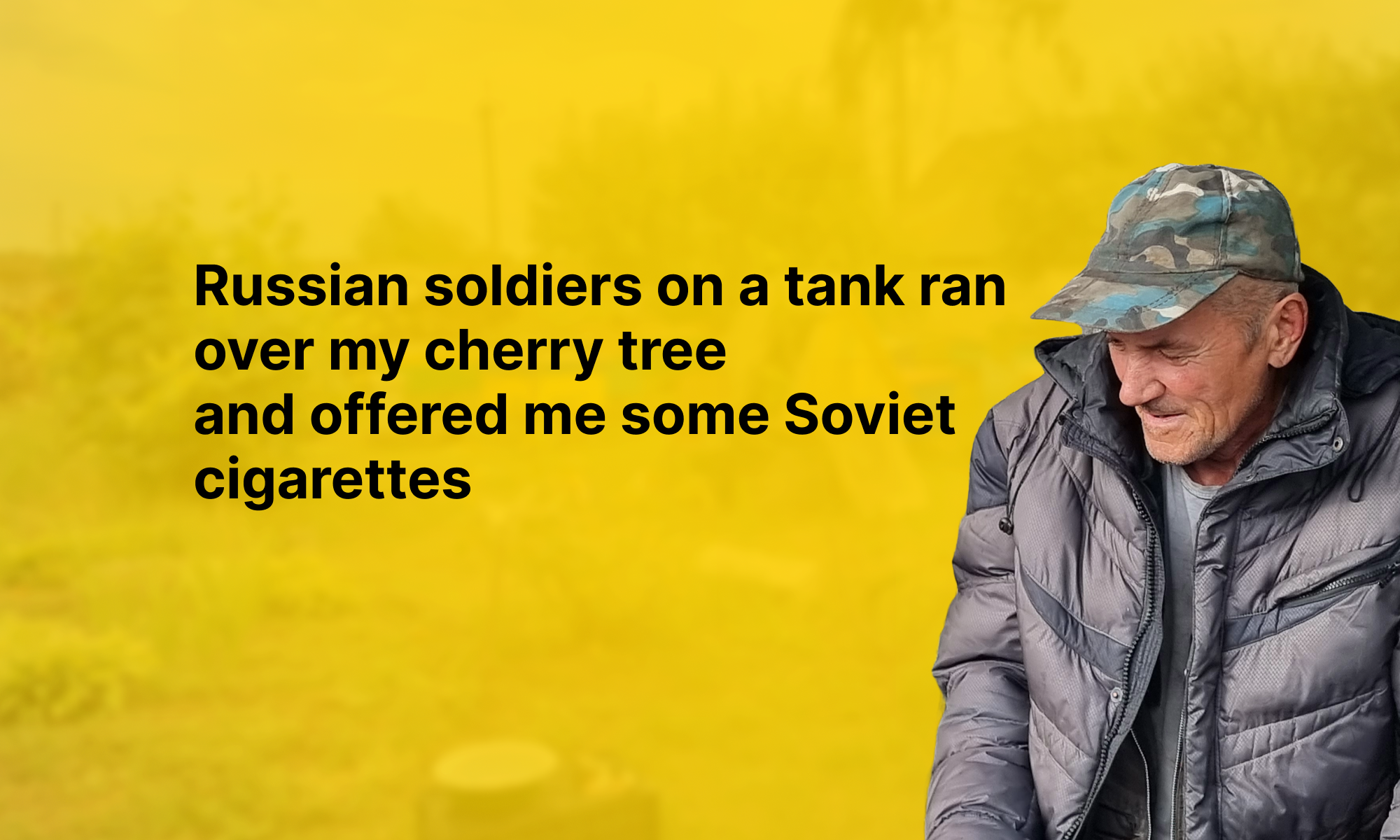
Russian soldiers on a tank ran over my cherry tree and offered me some Soviet cigarettes

M., from Pryputni village (Chernihiv region, Ukraine), shared stories about a bicycle in a puddle of blood, a tank in the yard, and a burning house.

The name has been encrypted for security purposes.

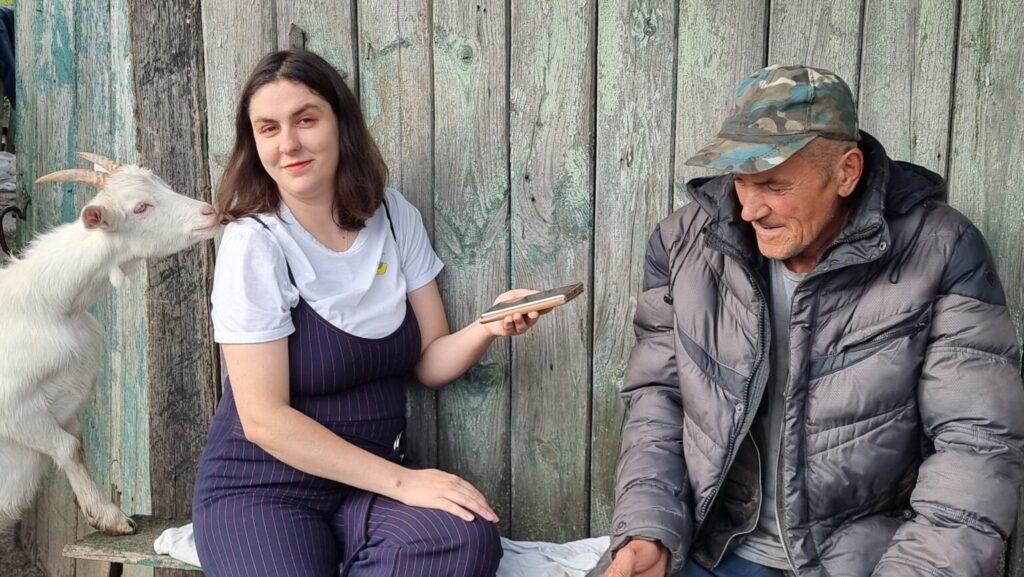
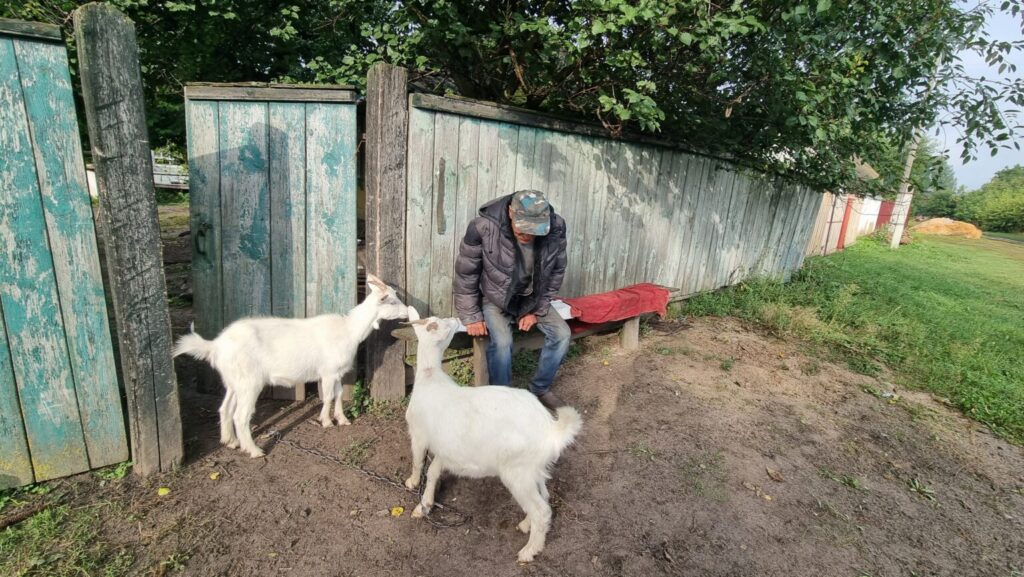
M. greets us near a house, holding towels in his hands. He brought bedding for the bench to make our seating more comfortable.

During our conversation, M.’s pets keep us company. Even the neighbor’s dog lies down near M.’s feet. Goats and cats circle around us, seeking treats and attention.

The man begins to tell his story.

When all of this began, I woke up at 6:00 a.m. on February 24, turned on the TV, and saw Zelensky. I didn’t immediately understand what he was saying. To put it bluntly, I couldn’t make heads or tails of it. So, I thought, ‘What’s he jabbering about?’ I didn’t grasp it at all, so I just went to work.

Sometime after dinner, I saw that all my neighbors went outside. I asked what’s up. They said: M., the war has begun! The war has begun! 

Around 7:00 in the morning, a convoy of vehicles, armored personnel carriers, and tanks arrived. For a month they were just walking back and forth past the village.

I used to work and travel in Russia, I have friends there, so I couldn’t understand, how could they do that? They just kept wandering around for a month, but as soon as they understood they’d have to leave, they made some mess. Chaos, chaos has begun.”

M. tells how he first met Russian soldiers. He was walking home and saw a group of armed men on his street.

“I thought, what should I do? They are russians. I decided to go home. It was springtime, it was still cold, so I thought: I need to warm my house. That’s when I heard them shout: “Owner!”

I went out, and there were seven men with assault rifles.They asked: “Are there any officers here at all?”  I said – what officers? Are you kidding me? There are only about three people living here.

Well, you understood me, right? How could there be any officers? 

That’s it, they left. I just started to light the stove. And then there’s another scream. I went out, there was a Russian with a machine gun. Much younger than me. He asked: “Man, do you smoke?” And we didn’t even have toilet paper. Yeah! And he said: do you smoke? Sure we didn’t have anything to smoke! I said: I smoke, but I don’t have one cig left. And he gave me a pack of “Stewardesses”. I was still a boy when that “Stewardess” was released.” (Old Bulgarian cigarettes, popular in the Soviet Union in the 80’s).

M. laughs sincerely for the first time in the entire conversation.

“Imagine how long it has been in their warehouses. Am I right? Well, I had a chat with him. Simple man, just like me. He said that he was also from a village.

I told him that I used to work in Moscow. He said that he had never visited Moscow. And I said, I said: you know what? That’s funny, cause I’ve been to Moscow many times.

M. says: when the Russians were retreating, he barely escaped death, hiding in a ditch from “a ball of fire, similar to flaming corn.”

And then immediately tells us about the first days of the occupation. 

“And for a long time I didn’t realize that the war had started and the shops were already closed, so I had to go to the neighboring village. I turned back and saw that the Russians were standing right before me. Nowhere to run. And as I kept walking, a Russian soldier saw me. There was a Buryat guy with him, and he spoke to me in Ukrainian.

He said to me “Dobrogo dnya” (“Good day” in Ukrainian.) Well, I responded “Zdrastye”(“Hey”— in Russian) in Putin’s language. 

He reluctantly answers questions about the deaths of local residents.

One day it was like this – I parked my bicycle near the store, and the next day when the convoy had left, I thought I’d go get my bicycle. But when I arrived, there was a puddle of blood next to it. When I asked people about it, they said a fellow villager had been shot. I don’t know why it happened, and no one talks about it.”

I myself had a tank standing in my yard. They broke my cherry tree…

M. does not know what the tank was doing in the yard, but when asked about it, he laughs bitterly. He says he didn’t ask. But he does not regret the event itself – God had mercy, the house survived. Neighbors were less fortunate.

“The neighbors’ house caught fire. We wanted to call the fire brigade. And the driver of the car said: what if they shoot me? We had to manage it ourselves. My neighbor told me – let’s extinguish it, and when the Russians come, you just boo them, wave your hands or something, you know, make them run away. I’m not making it up!

M. did not have the opportunity to evacuate, and he himself had no such plans.

“A Russian once said to me – why didn’t you run away using the green corridor? And how should I know about that corridor? I have no mobile phone, no electricity, no TV, no radio. There was water from the well, that’s all I had. How was I supposed to know?”

While we are talking, M.’s goats are constantly trying to join the conversation. The host quarrels softly. Marysia, a chubby kitty with ginger stripes, constantly tries to climb into the owner’s arms.

“The animals survived everything. I got my goats only when the Russians left. I often think about the neighbor’s dog. The neighbor says that he pulled him out of the burning shed, but the dog used to always hide there, so he climbed back. Well, he burned alive. Poor thing.

The chickens were hiding under the shed, but there was already no shed. Everything burned down. 

M. recalls: most of his neighbors left, only two households stayed. However, after the de-occupation, everyone returned.

“The day when everything was over, I saw my neighbor. During the occupation we had three households here, then she and her husband left. And that day I saw her riding a bicycle, carrying her belongings. When she saw me – could you believe it? – she cried so much, I almost started crying myself! She said: dear, I thought I would never see you again.

And she said to her husband:  there should be vodka at our house, if the Russians haven’t taken it away. Go, she said, and pour him some. Because he was the last person we saw before we left and the first person we saw the day we came back.”

M. asked not to mention his name. He said that when the Russians come back, they will shoot him “right here, by the fence” for this kind of story.

A shaggy neighbor’s dog led us to the road.

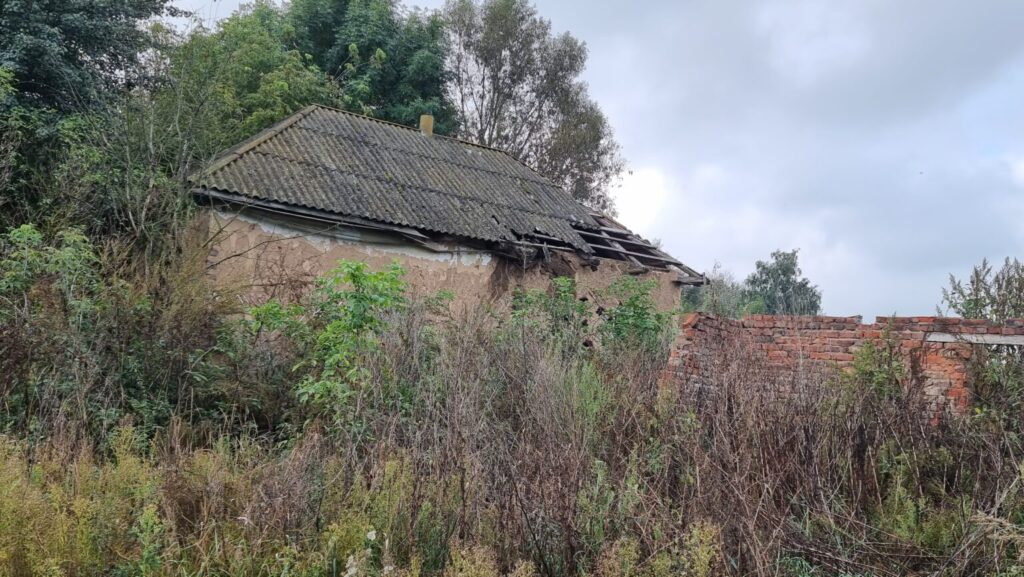
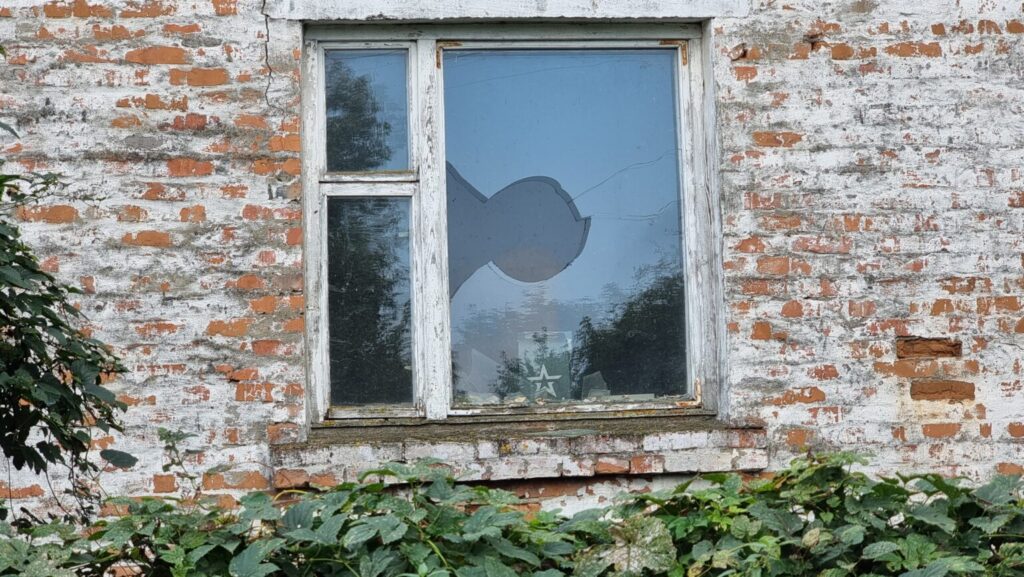
On the way back, we found a Russian dry ration standing on the windowsill of an abandoned house with broken windows.

The material was prepared by Daria Danova and Kristina But as part of the «Truth Through Stories» School.

The project is implemented by the Education Human Rights House (Chernihiv) with the support of the Ministry of Foreign Affairs of the Czech Republic as part of the local transformation project «Ukraine and Ukrainians: Modern Chronicles of the Fighting for Freedom and Democracy».