Новини
The resident of the village of Priputni in Chernihiv region tells a heartbreaking story of civilians killed by the Russians.
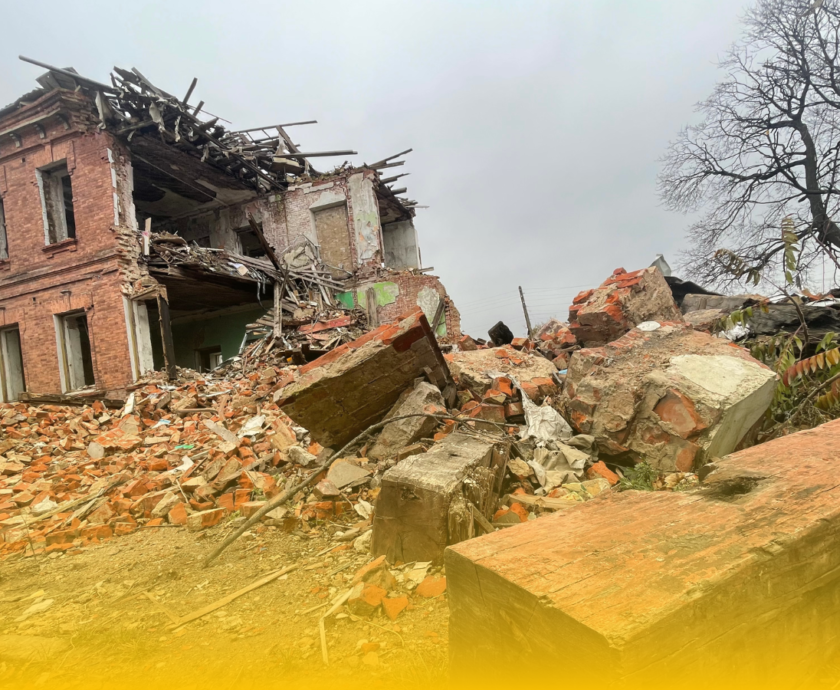
Priputni is a small village in Chernihiv region. The Russian military was first seen here on February 25, 2022, and they stayed in the village until the end of March 2022, causing the most damage as they retreated. As you walk through the village, it’s hard not to notice the visible scars of war: burnt houses, destroyed buildings, and the traces of military vehicles on the asphalt.

But what the naked eye can see is only the tip of the iceberg. To see more, you must be willing to speak and listen.
As we stroll through Priputni, we meet a woman in her fifties, dressed in a blue floral robe and a warm sweatshirt. She wears a headscarf. The woman is returning from her garden, and by her side is a friendly dog with a wolf-like face named Aira. Aira approaches us, and her owner lovingly says, “Don’t bother them, dear, they’re strangers.”
We begin to talk to Mrs. N. (we don’t mention her full name for safety reasons), explaining who we are and where we’re from, and most importantly, what we want to write about. As soon as she hears the word “Russians,” tears start to well up in her eyes.

“My son was killed by the Russians. They shot him…”
That’s when we learn that Mrs. N. had two sons: one was 24 and the other 19 years old. The older one was killed by the Russian military, and he was a civilian. Warning: the following text contains sensitive material.
“He was friends with another guy, well, more like an acquaintance because the guy was much older. But they were close. He had tractors, so my son used to help him with the tractors and everything. Well, they were killed together when they were going to work in Krupychpole. The Russians shot them at the beginning of Krupychpole. They just burned that guy; he was burnt alive, there was nothing left, just charcoal, burnt to the bone… and my son was found with him, at least he still had his body, even though he was badly burnt.”
This is not an isolated case of Russians killing civilians. Unfortunately, among the local residents, there have been seven casualties.
“They went into other people’s houses, checked homes, and where no one lived, where the houses were empty because people had left, they lived there… They took our food. My neighbor lives over there; they took her butter, bread, all the oils, everything they could find, they took it all. Let them take it, I said. But why did they kill people? Like my son, for what? Innocent people. They shot our locals in Krupychpole. A couple was going to a funeral in Vyshnivka, so on their way there, near Verbychky, just as you head to Vyshnivka, they were also shot. And one man went… You see, the house over there already burned down, so he went there to put out the fire, and they killed him near the village council…”
Mrs. N. confesses that there was a time when the residents of Priputni buried their fellow villagers not in the cemetery but near the church. The hard decision was based on simple safety considerations: neither the priest nor the local residents wanted to risk their lives by going to the cemetery.

Mrs. N. also recalls an incident when an elderly woman was blown up by a landmine.
“There was also a woman who blew herself up on a landmine, on the bridge. We told her not to go, not to go at night… but she didn’t listen and went anyway. Well, we heard a big explosion.”
This woman doesn’t complain about life. She agrees to the publication of her story only on the condition of anonymity because she fears that the Russians might return and seek revenge for this truth. She says life goes on somehow, and they neither receive nor expect any help. She says, “Who cares about us here?”
The only thing that truly worries her is that she can’t afford to put up a tombstone for her son; there’s just a simple cross. Friends console her, saying that heaven has accepted him anyway. But it seems that a proper burial of her beloved son means a lot to Mrs. N.
As she talks about what she’s been through, she doesn’t cry. She stays strong. Sometimes, Aira, the mischievous little pup, seems to sense that her owner’s pain is becoming unbearable and that’s when she does something cute and silly: chasing her tail or trying to nibble on our sneakers. And the smile returns to the woman’s face.
And the sun shines brightly, just like it does during Indian summer.
And life goes on in the village of Priputni in Chernihiv region.
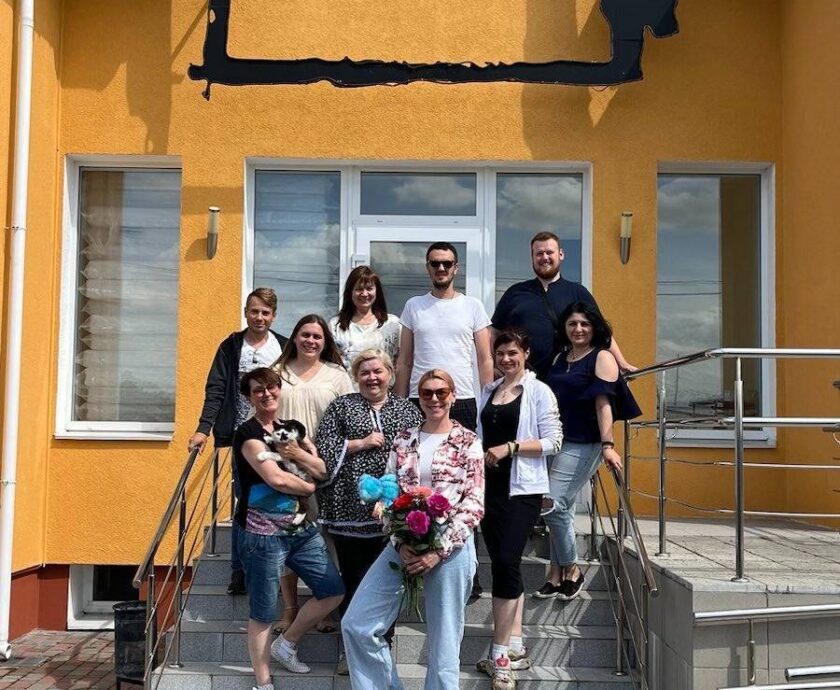
The material was prepared by Kristina But as part of the «Truth Through Stories» School.
The project is implemented by the Education Human Rights House (Chernihiv) with the support of the Ministry of Foreign Affairs of the Czech Republic as part of the local transformation project «Ukraine and Ukrainians: Modern Chronicles of the Fighting for Freedom and Democracy».